
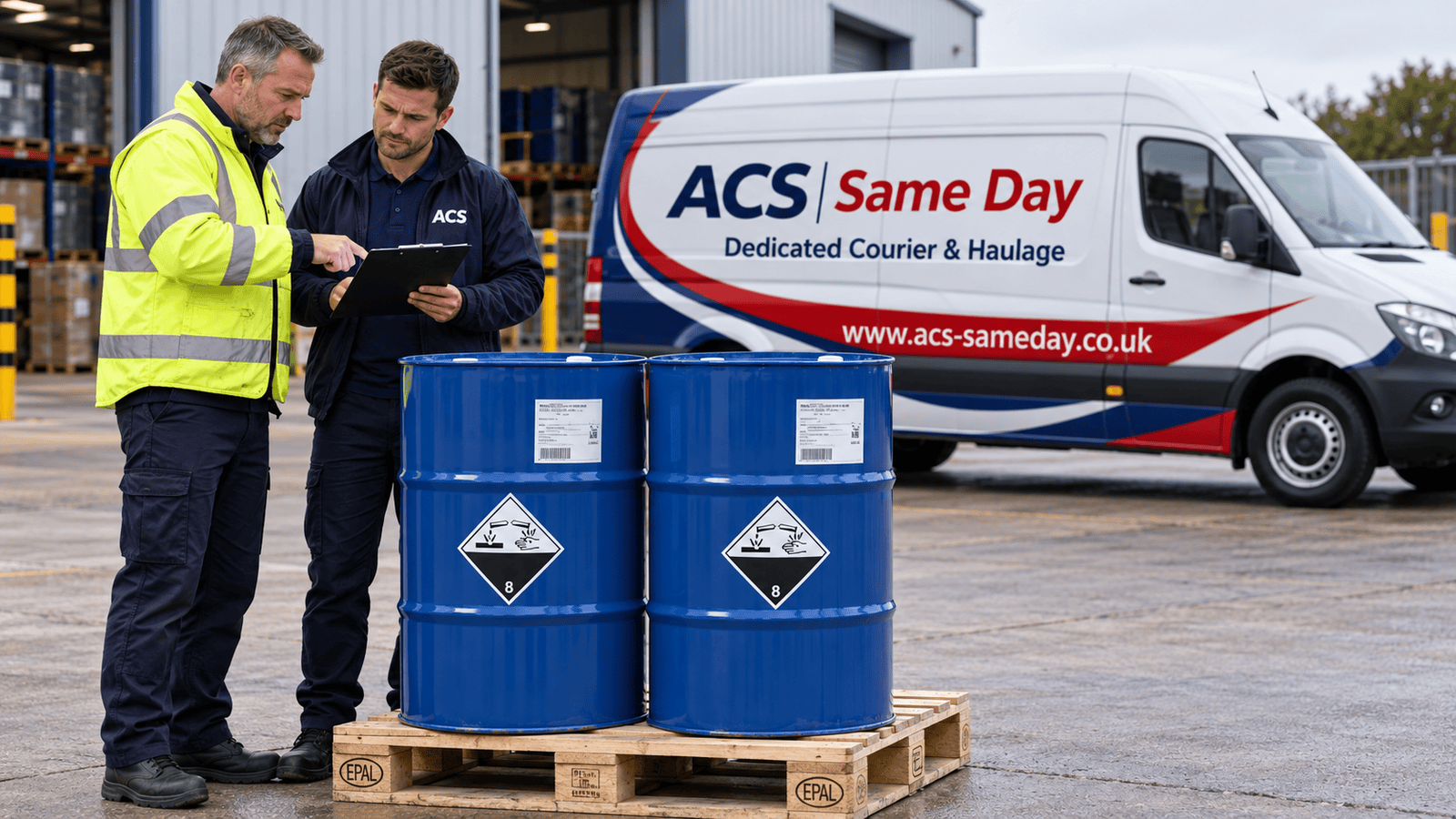
Moving dangerous goods? Start with the shipment details.
If you need to send paints, aerosols, batteries or other dangerous goods, the first step is to find out exactly what you’re shipping. A description such as “one pallet of chemicals” won’t give a carrier enough information to quote or arrange collection.
ADR transport requirements depend on the goods, their quantity, packaging and the journey. Here’s what to prepare before contacting ACS, whether you’re organising a regular stock transfer or an urgent delivery to site.
Check the transport classification first
Ask your supplier, manufacturer or dangerous goods safety adviser for the confirmed transport classification. You’ll need the UN number, proper shipping name, hazard class and packing group, where one applies. A trade name or photograph of the product isn’t a substitute for those details.
For substances and mixtures supplied with a Safety Data Sheet, Section 14 is a useful starting point. Other goods, including some battery products and equipment, may need separate transport information. If anything is missing or unclear, resolve it with the supplier or adviser before arranging dispatch.
Have the quantities and packaging details ready
Alongside the classification, prepare:
- The quantity of dangerous goods for each UN number, using the appropriate units.
- The number and type of packages, such as cartons, drums or cylinders.
- The gross weight and loaded dimensions, including pallets and any overhang.
- Details of how the goods are packaged and any special handling requirements.
Tell us about the whole load. If one pallet contains several products, list each one rather than describing only the main item. Photographs can help explain the layout or packaging, but we’ll still need the goods information.
Does a small load still need ADR checks?
Yes. A small quantity doesn’t automatically make dangerous goods suitable for a standard courier booking.
Limited quantity provisions depend on the substance and how it is packed, including the quantities in individual inner containers. The separate small-load exemption depends on the goods’ transport categories and the quantities carried on the transport unit. They are different provisions, with different conditions.
If you believe an exemption applies, tell ACS which one and provide the information supporting it. Have your supplier or dangerous goods adviser check any uncertainty. HSE explains the distinctions in its guide to ADR exemptions.
Sort out the documents before collection
The sender needs to provide the required consignment information and any applicable transport document. A Safety Data Sheet does not automatically replace that document.
Where ADR instructions in writing are required, the carrier supplies them to the vehicle crew. These are separate from the shipment’s transport document.
Electronic documentation can be used where the relevant requirements are met, so a paper copy isn’t the only option. Agree the format and access arrangements before departure: an email that nobody can retrieve when needed won’t help. The Department for Transport’s documentation guidance explains the requirements.
Check the goods and both sites are ready
Packages need to be correctly prepared, marked and labelled for the goods and the provisions being used. Check their condition before collection. Damaged packaging, leaks or unclear labels need attention before the shipment is released.
Raise returns, waste, damaged goods or batteries needing special assessment at the enquiry stage. Don’t assume they can travel on the same basis as a previous delivery.
For the collection itself, confirm who will load, what equipment is available and whether the vehicle can reach the loading point. Check the same details with the receiver. Give us the site contacts, opening hours, booking references and any vehicle restrictions. If you need a tail-lift or loading assistance, ask before booking.
Let the shipment determine the vehicle
A van may have enough space for the goods, but space is only one part of the decision. Driver training, equipment and vehicle marking requirements depend on the load and any applicable exemptions. An ADR driver training certificate is required for some movements; other training duties can still apply when that certificate isn’t required.
ACS reviews the shipment before confirming whether it can be accepted and which transport arrangements are suitable. You can read more about our dedicated ADR courier service.
Request an ADR quote from ACS
Send the goods details with the collection and delivery addresses, ready time and required delivery time through our ADR quote form. Hazardous goods need manual review; don’t use a standard instant van booking.
If the job is urgent or has a fixed deadline, call 01234 385970 with those details ready. A quote request doesn’t confirm acceptance or reserve a vehicle. We’ll confirm whether the shipment can be accepted and the arrangements for booking. If the load changes afterwards, let us know before collection.