
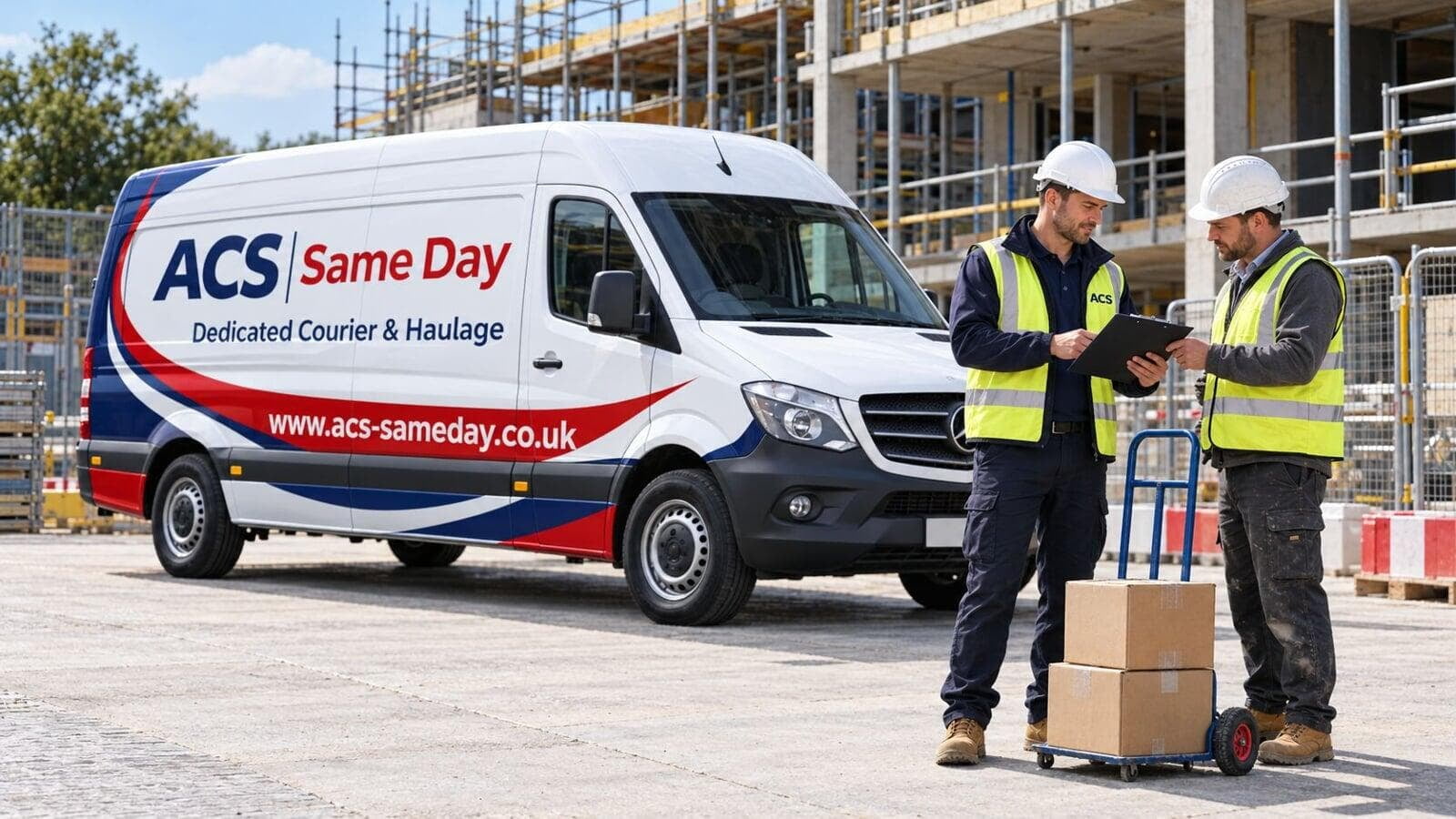
Plan the handover before dispatch
A courier delivery to a construction site needs more detail than a postcode and a company name. The driver needs the correct entrance, the site needs to expect the load, and someone must be ready to receive and unload it.
Whether you are sending a small replacement part, boxed equipment or palletised materials, sorting out the delivery details before collection helps prevent avoidable waiting and failed deliveries.
Find the right delivery entrance
The postal address may lead to the project office, a public entrance or the opposite side of a large development. Ask the site contact for the delivery gate, approach instructions and the location where goods should be received.
Include the project name, principal contractor and the business or team receiving the goods. On a shared site, a delivery addressed only to a company name can be difficult for the gatehouse to identify.
If useful, supply a site plan or location pin alongside the full address. Check that the approach is suitable for the vehicle; a convenient route for a car may not work for a loaded van or truck.
Confirm the slot and booking reference
Find out whether the site operates booked delivery slots and who is responsible for reserving one. Record the reference and any instructions the driver must give at the gate.
Ask whether the slot is for arrival at security, entry to the unloading area or finishing unloading. Allow for the time between those stages when agreeing the collection plan.
For a fixed delivery slot, call ACS before booking. Tell us when the goods will be ready and which slot the site has offered. We’ll confirm whether we can arrange transport to meet it.
Get a contact who can receive the goods
Provide the name and mobile number of someone who will be on site at the expected arrival time. A head-office number is less useful if the person answering cannot direct the driver or arrange unloading.
The receiver should know what is arriving, how many pieces are expected and which contractor ordered them. Add a purchase order or site reference if it helps match the delivery to the right team.
Tell us about lunch closures, shift changes or periods when unloading equipment will be unavailable. If the contact or entrance changes after booking, pass on the update as soon as possible.
Match the vehicle to the load and the access
Measure the complete items, including packaging and pallets, and provide their gross weights. Long materials, awkward shapes and items that need side access should be described before a vehicle is selected.
Ask the site about height and width restrictions, weight limits, turning space and any limits on vehicle type. Provide any specified FORS level, vehicle equipment requirement, driver induction or PPE requirement when requesting the quote. Do not assume those requirements are included in a standard van booking.
Our fleet guide helps you compare vehicle options. The vehicle needs to fit through the site entrance as well as carry the load.
Agree exactly how unloading will happen
Tell us what unloading equipment the site will provide and who will operate it. If equipment is shared between trades, confirm it will be available for the delivery rather than simply somewhere on the project.
A tail lift lowers suitable goods to ground level; it does not place materials upstairs, over a barrier or at the far side of an unfinished site. Explain any need for a crane-equipped vehicle, specialist handling or additional assistance before booking.
Loose gravel, soft ground, steep slopes and uneven temporary access can make a proposed unloading arrangement unsuitable. HSE guidance emphasises firm, level loading areas and keeping unrelated pedestrians and traffic clear. The site should arrange a safe receiving area; see HSE loading guidance.
Loading and unloading are the sender’s and receiver’s responsibility unless agreed with ACS in advance. Agree these details before the driver arrives.
Label the goods for the right project
Mark each package with the project and receiving contractor, plus the delivery reference where required. Number multiple pieces so the receiver can identify the complete consignment.
Protect the goods for transport and include any delivery paperwork. Keep dispatch instructions separate from installation instructions: the driver needs to know where to go and who should receive the goods.
Send one clear set of instructions
Before requesting transport, bring together the full addresses, delivery gate, site contact, goods description, dimensions, weights, loading method, ready time, delivery slot and booking reference. Add the site’s access and vehicle requirements.
ACS supports construction and other business deliveries using dedicated vans and haulage options. Call 01234 385970 for fixed slots or specialist site requirements. For a standard van delivery, start with our courier quote calculator and provide the complete delivery instructions.