
How many times will your goods be moved?
Two deliveries can cover the same distance and take very different routes. One van might collect a crate from your supplier and take it straight to your customer. Another shipment might travel through a collection depot, a central hub and a delivery depot before reaching the same address.
That is the main difference between direct delivery and depot handling. It affects how often the goods are moved between vehicles, which timetable they follow and what you need to consider before sending them.
Following a consignment through a depot network
In a typical shared network, a collection vehicle brings goods from several customers into a local depot. Consignments are sorted by destination and sent onwards, often on a larger vehicle travelling to a hub or another depot. A local delivery vehicle completes the final leg.
The exact route varies between carriers and services. Not every consignment passes through the same number of depots, and parcel handling differs from pallet handling. What they share is the principle of combining freight to make better use of vehicles travelling between areas.
That can make a network service good value for regular stock deliveries. A single pallet does not have to cover the cost of a vehicle making the whole journey just for that load.
What changes with direct delivery?
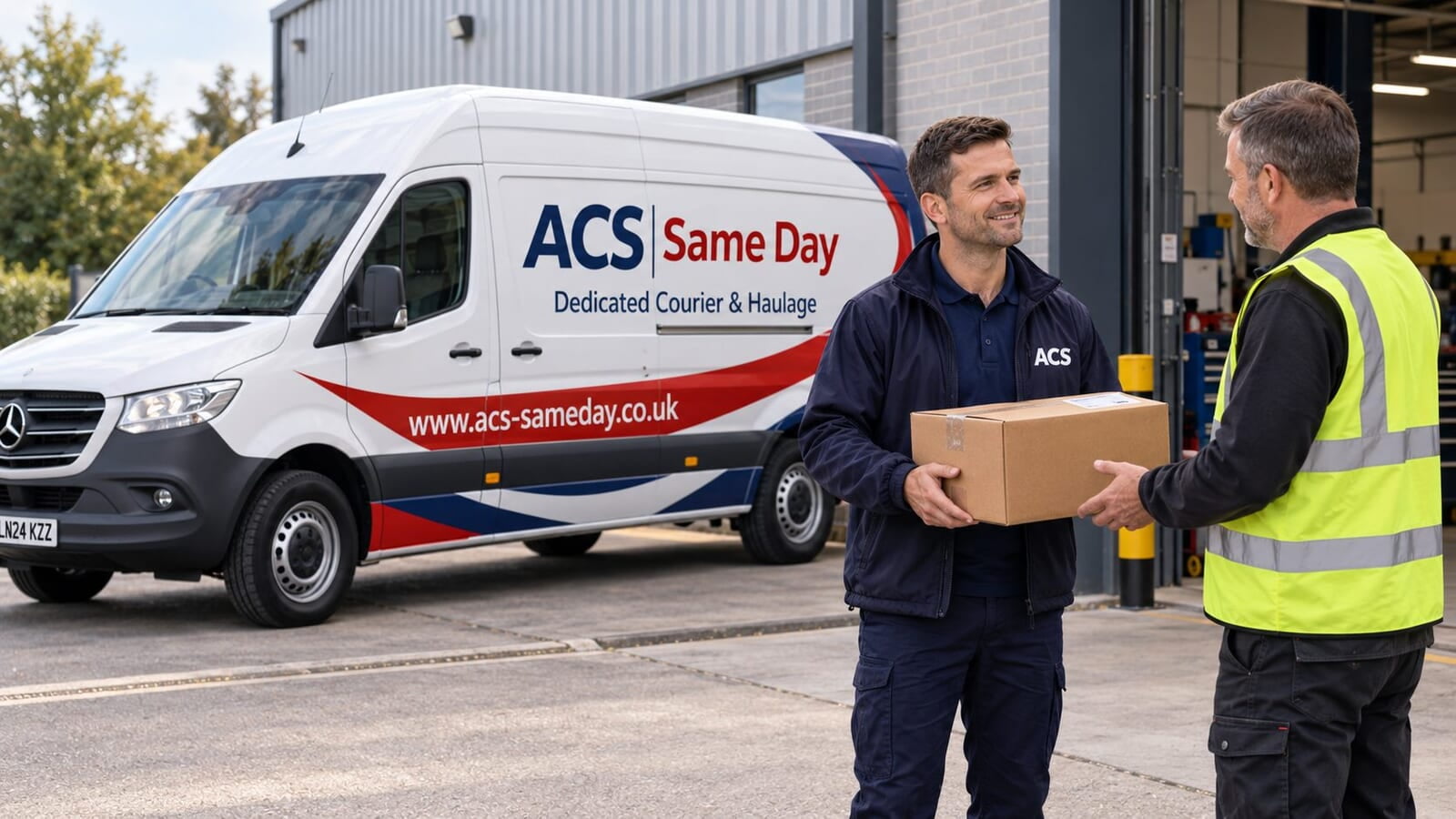
With dedicated direct transport, your goods are collected by the vehicle assigned to the job and stay on it between the agreed stops. They do not go into a shared depot sorting system.
A direct delivery can still include several collections or drops if that is the route you have booked. The distinction is that those stops form part of your agreed job, rather than transfers into a network carrying unrelated consignments.
You can discuss the vehicle and handling arrangements for that particular load before collection. Our fleet guide shows the van and lorry options, but the choice also depends on loading access, weight and the facilities at each address.
Why the number of transfers can matter
Every transfer means the goods need to be moved again. Well-packed cartons and stable pallets are designed to withstand normal freight handling, and many travel successfully through networks every day. Extra transfers do not automatically mean damage.
They do, however, deserve attention if the load is difficult to handle. Think of a long component with an exposed end, a display with a delicate finish, or equipment that needs to stay upright. Ask whether the packaging protects it throughout the proposed journey and whether the carrier accepts its dimensions and handling requirements.
For these goods, reducing transfers may be a reason to choose a dedicated vehicle. It does not remove the need for packaging or restraint: the load still needs to withstand braking, cornering and road vibration.
If you are unsure, send photographs and describe any lifting points or handling restrictions. A “fragile” label on its own does not explain how an item can safely be moved.
A delivery day is different from an arrival appointment
Network services work to collection cut-offs, scheduled trunk journeys and delivery rounds. Some offer timed services or booked deliveries, but the options and conditions depend on the carrier, destination and goods. Confirm the service you are buying rather than assuming “next day” means before your team starts work.
Dedicated transport allows the collection and delivery plan to be discussed for the individual job. This can help when a supplier only releases goods late in the day, or a receiving site has a specific appointment.
For example, a crate needed for an installation at 09:00 has a different requirement from replacement stock that can arrive at any point during the working day. Give the transport provider the actual receiving deadline and allow time for unloading. Direct transport still needs a realistic schedule; it cannot remove traffic or delays at the loading point.
What tracking tells you about the journey
A network scan can confirm that goods have reached a depot or passed a handling stage. It does not necessarily mean the consignment is already on the final delivery vehicle. Read the status description and ask the carrier if it is unclear.
For a dedicated delivery, useful updates centre on collection, progress and handover. Agree who needs to receive an update and who can make a decision if the delivery contact is unavailable or the site changes its instructions.
Whichever service you use, arrival at the postcode is not the same as a completed delivery. The driver still needs access, unloading arrangements and someone authorised to receive the goods.
Four questions to ask before choosing
- Can the packaging cope with the planned handling? Check the carrier’s requirements for the actual goods, including any overhang, stacking restrictions or unusual shape.
- What time does the recipient really need the delivery? Distinguish a preferred day from a fixed appointment or site closing time.
- Can both sites load and unload the proposed vehicle? Confirm equipment, access and staff availability before collection.
- What would a delay cost the business? Compare the transport price with any waiting labour, missed installation or interrupted production.
For routine, suitably packaged freight with workable delivery windows, a shared network may be the sensible choice. When the load needs fewer transfers or a journey arranged around a particular deadline, discuss dedicated transport.
For a standard van movement, you can get an online courier quote. Call 01234 385970 before booking if you have a fixed deadline, need collection within 90 minutes or have unusual handling requirements. We can discuss the goods, the route and how each site will receive the vehicle.